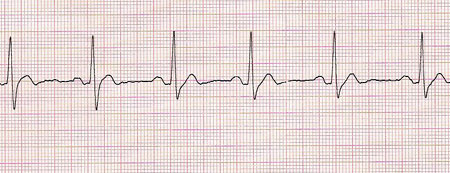
Because of my heart’s fibrillation (an irregular heartbeat) and tachycardia (a rapid heartbeat), I spent the last month disabled: That is, in an instant, I became unable to do some things that were normal for me the day before. And then, in another instant, with a shock of electricity on Monday afternoon, I was able to do them again. But now I do those things with a slightly different perspective. I learned something in my disabled month.
I do most everything fast. I walk as fast as I talk as fast as I eat as fast as I type. But now I slowed down because if I overdid things by just a hair, the heart rate would go wacky. Walking up a slight hill on a Manhattan street — even walking against the wind — suddenly felt like a force field fighting me me.
It’s no big deal. It didn’t hurt. It wasn’t scary. Please stop yourself from leaving those nice, sympathetic comments — which I very much appreciate, but which I don’t need anymore, being normal again. I got around New York and London, too, during this episode. My only point here is that something changed: I was slowed down. And that changed other things.
While my heart was skipping, stuttering, and speeding, any staircase I faced grew before me like the road before Sisyphus. For a week, I couldn’t go up the stairs in my own home and rationed my trips and missed some work. Then I fired the doctor who wouldn’t give me the medication to control my heart rate. I got back on the right pill, a simple beta blocker, and then I was able to get up and out of the house. But still, when I faced stairs, I went up them slowly. I sometimes had to stop halfway up and, having conquered 20 steps, I would pull off to the side to recover.
I suspect I irritated the people stuck behind me on stairs — people in a rush, people like me, only days before.
I now stood on the right on escalators, rather than rushing up on the left. I now sought out elevators even for short, one-floor hauls. In the PATH station in New York, I stood there with old people, sick people, and mothers with baby carriages, waiting for a lift. I was embarrassed. I wondered whether they looked at me thinking, ‘What a lazy SOB: he looks fit and healthy and the excercise of a few stairs would be good for him: Get moving and don’t take up space on our elevator.’ Of course, it’s New York: Nobody really pays that much attention to anyone else. But I heard that echo in my head.
When I checked into my quaint hotel in London, built in seventeen-something, they were leading me, hauling my suitcase, up to two flights of stairs to my room — no elevator — and I had to beg off and beg for a ground-floor room. The clerk looked irritated. I might have been irritated at that, New Yorker that I am, if I had been in fighting fit. But instead, I felt embarrassed.
When I got on the plane coming home, they put me in an exit row and asked me the standard question: Are you able, etc.? I had to say, no, I’d rather not sit there just right now. I didn’t say I wasn’t able, though I wasn’t. I sensed another odd look: ‘What, you won’t rescue your fellow passengers, you selfish, first-class oaf?’ As we used to say in California, I was projecting. But that thought did flash through my head as I thought for a second about sitting there to avoid the embarrassment, though I realized that would have been irresponsible.
You all knew I was in afib, as we say in the club. It was rather self-indulgent to blog about it, for people go through far worse things than this. But I was glad I did, for I met other nice people who shared their help and experience, among them Tom Evslin’s brother, Bill, a doctor who’s a member of the club and who’s working now to find ways to survey fellow members to see what can be learned.
But I didn’t tell everyone I felt strange. I did talks and panel discussions and was fine. But as I blogged, when I did an appearance on Donny Deutsch’s show and got pissed at a professional prude and enemy of the First Amendment, my heart really went wacky fast and I thought for a second I might pass out on TV. Now that would have been embarrassing. Luckily, few would have seen it.
But now, I’m normal again. I bound up stairs, walk up on the left on escalators, rush by elevators, carry suitcases. But the contrast is so stark, it taught me a very small lesson about being disabled for a month: It wasn’t the heart rate that changed life, it was what I thought of myself that changed.
No, I’m not going to slow down and smell roses now; they make me sneeze and this wasn’t that big a life lesson. I’m not going to turn into a soft-hearted soul, even if my heart was soft; I’m still a snotty New Yorker and still a snarky blogger. No, I hope that I simply learned that the people in front of me are going at their own speed, probably for a reason. They’re not trying to get in my way as I rush past. I need to stay out of theirs. And I need to be grateful that I can rush past again. I need to appreciate normal.