There are some good and meaty comments about the emptiness of Barack Obama’s change rhetoric at Comment is Free, where I crossposted my remarks from below, and also on Eamonn Fitzgerald’s blog. First, Eamonn:
The Austrian novelist Robert Musil began writing his masterpiece The Man without Qualities (Der Mann ohne Eigenschaften) in 1921 and was still working on it when he died in 1942. The three-book work is set in a country called Kakania, a parody of the Austro-Hungarian Empire, and the story includes a patriotic movement called Parallel Action, which is devoted to the “redemptive idea”. The leaders of the movement evoke it constantly in the vaguest terms because they have no idea what it means or how it might be applied. One of the group’s most ridiculous figures is General Stumm, a man who has almost no experience with ideas. Despite this drawback, he is determined to discover the “redemptive idea” before anyone else, and with the utmost efficiency. Says Stumm: “It turns out that there are lots of great ideas, but only one of them can be the greatest — that’s only logical, isn’t it? — so it’s a matter of putting them in order.”
In his excellent essay “Exhuming Robert Musil”, Ted Gioia says that the protagonist Ulrich “… changes his ideas with the ease of an actor learning a new role. He is prone to making sweeping statements, such as: ‘In times to come, when more is known, the word ‘destiny’ will probably have acquired a statistical meaning.’ His eloquence and ability to turn a phrase are stunning, yet his ideas never cohere into a philosophy or a belief system. They are as ephemeral as a passing storm.”
Is the mantra of “change” the “redemptive idea” of our times? Jeff Jarvis now hates the word.
From Comment is Free, Ebert says:
The word means exactly nothing. Every tinpot workplace has a ‘change programme’ with a ‘change director’ and a ‘change manager’… everyone has to ’embrace change’ and ‘show a commitment to change’. Nothing changes but the organisation often gets ‘restructured’, putting any real work back for six months while those who have still got jobs (which they have had to re-apply for) get used to the new structure. The word seems to have crept in since the fall of the Soviet Union to give the illusion that capitalism is ‘going forward’ (another empty useless expression).
Polygram says:
Obama is a fantastic example of the hollow man, the tabula rosa on which the campaign consultants can write whatever script they wish, and Obama, with no idea what the hell it means, will deliver it in just that kitsch and florid way so beloved in American campaign rhetoric.
Yesterday says:
I worked in a place where a ‘change director’ was appointed who had come from a deadbeat job at a bank. We called him the ‘small change director’. ‘Embracing change’ always made me think of Alcoholics Anonymous and a lot of the training techniques seem to have come from that body.
Christopherhawtree:
The word “change” is of course always on the lips of Gordon Brown. But the past decade has shown that “change” can simply mean misdirected busyness; apparent change is in fact stasis. Real change is not announced but happens as a result of more complex social and artistic forces than any such proclamations can engender.
Chewtoy:
If they’re not referring to the Buddhist and quantum theory notion that all matter is in constant flux, then surely they must mean by “change” that they’ll change to a totally different story once they get elected.
Edwardrice:
“What is most important in the age of Change is not change itself but continuity in change and change in continuity”
(The Collected Thoughts of Comrade Brown) – Private Eye
Giuseppeh:
t’s all about subconscious associations. By saying the word enough and having it on as many banners surrounding the candidate, each of them hope to become that brand.
Of course it would be great if we lived in an adult world in which issues were discussed, candidates gave us their specific points of view on each and every major issue facing our world and people listened and analysed.
Of course it would be great if the advertising men didn’t dominate the political stage as they dominate the commercial stage in our world, peddling people like honda cars.
But we live in this world and people do respond to ridiculously simple subconscious messages, people are like five-year-olds asking their mum for the latest transformer toy for christmas because they saw it in the adverts between a postman pat cartoon.
We live in this idiotic world, in which people are just going to get dissappointed later on, like the kid who gets bored with his new, flashy transformer toy after five minutes and then realises christmas doesn’t come every day.
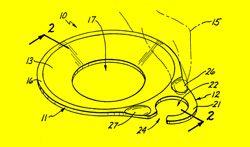 God bless Charlie Gibson last night — the best moderator on any debate so far, I’d say — who pointed to the emptiness of change when Barack Obama and John Edwards bragged about doing in those evil lobbyists and stopping them from corrupting democracy by buying legislators meals. Charlie pointed out that the only change in the rule is that they can’t buy lawmakers meals while sitting down. Here’s the solution to that: a